Wednesday, June 26, 2013

Various Artists - Back to Peru: The Most Complete Compilation of Peruvian Underground '64-74

Various Artists - Back to Peru: The Most Complete Compilation of Peruvian Underground '64-74


The magic of compilations like this resides in their ability to to transport the listener to their era of choice, or at least give him/her an idea of the period. In 22 tracks, VampiSoul recordings takes us back to a period in Peruvian underground music in which psychedelia was recognizable everywhere. American influences are seen not only in the style of music played, but the language and image of the musicians themselves. However, as it usually happens, Peruvian musicians put some of their own influences on psychedelic rock, which makes this compilation a fun listen.

There are very few dull moments in which it may feel as if the performers are trying too hard to be American. Whether it's Los York's hazy atmosphere in "Abrazame Baby" or El Polen's take on Andean folk in "Mi Cueva", there's something distinctively Peruvian about the music on here, which can actually lead to non-Peruvian listeners or non-Spanish speaking listeners to miss some of the charm, especially in the lyrics. However, the compilation does not alienate anyone: A lot of the songs are in English and none feel "too Peruvian".

Back to Peru is essential for anyone interested in how American music influenced the South American underground, interested in garage rock, or anyone who wants a new take on psychedelic rock.

Tuesday, June 25, 2013

Sun Ra - Deep Purple (1973)


According to himself, Sun Ra was born on an unknown date, in an unknown location on Saturn. According to some far more boring people, he was born Herman Blount in 1914, in Alabama. Regardless of his origin's, Sun Ra's music was undeniably otherworldly  and in his roughly 35-year career, Ra changed the face of jazz music, embracing a style far more bold, challenging, and fittingly extraterrestrial.

Monday, June 24, 2013

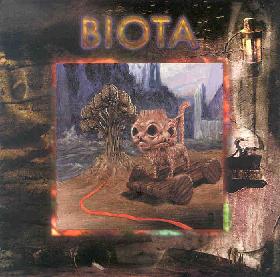
Biota- Invisible Map


From what I’ve gathered listening to an infinitely small sampling of all the music out there, all genres have their highs and lows.  Whether it’s a specific moment or scene, or just a handful of artists and albums, every category (save for an anomaly or two) offers both great and horrible music.    However, for me personally, the range of quality is never as extreme as with progressive rock.  At its best prog is both complex and evocative, offering varied and intricate instrumentation that can still stir up abstract yet potent emotions.  Conversely, emotions and an artistic focus are often eschewed for technical wankery, pseudo-intellectual concepts, and general soullessness.  Whenever I hear an album described as 'progressive rock', I get both excited and nervous, as the potential for both success and failure is massive. 

Saturday, May 25, 2013

Simply Saucer - Cyborgs Revisited (2003)


Simply Saucer was a Canadian rock band formed during the late 70s. Though the proto-punk scene wasn't the talk of the time at the moment, Simply Saucer still managed to create a record that would defy all punk records that came before it, by showing a clear and worthy apprehension of the history of rock music. They leaped from style to style, from noise to noise, exemplifying what rock music is all about. Noise, sweat, dirtiness, and rawness, all into one package of free-form rock jams that fall under hard-to-classify.

Thursday, May 16, 2013

Art Ensemble of Chicago- BAP-TIZUM (1972)


The Art Ensemble of Chicago is a jazz collective from, well, Chicago that rose to prominence at the latter half of the free jazz movement during the late 60s and early 70s.  Gaining prominence with their soundtrack for the French film Les Stances a Sophie, the ensemble went on to release BAP-TIZUM, a live recording from the Ann Arbor Blues and Jazz Festival in 1972.   While the group would go on to release many more albums over the next few decades, and though they are still active to this day, BAP-TIZUM still stands as one of their crowning achievements:  a vibrant recording that still sounds fresh and inventive today. 

Albert Ayler - In Greenwich Village (1967)


The Village Vanguard, New York City, 1966. We was sittin’ there watchin’ the stage. Waitin’ for the man they called Ayler to come out and do his thing. It was me and my four droogs. Them bein’ Sanic, Finn, and Dim; Dim being really Dim.
‘Round an hour’d passed and the place was packed straight through to the back. I’d just dropped some dollars for Ayler's Spirit's Rejoice six months back. Now was the time, this was the place. The Village Vanguard. New York City. 1966.

Saturday, May 11, 2013

Th' Faith Healers - Lido (1992)


Th' Faith Healers were along with Stereolab and PJ Harvey one of the most prominent Too Pure landmark bands. Like Stereolab they also received notable influence from Germany's stellar 70s Krautrock scene, though unlike Stereolab, Th' Faith Healers were more along the raw veins of Can (especially Can) and Brainticket than from the minimalistic complexions of La Düsseldorf and Neu!. Even so the Healers' sound is still hard to classify since it ranges from noise rock to dream pop and from shoegaze to alternative rock, yet they are always exploring different territories in the wide spectrum that is rock songwriting. They never seem to conform to one specific style, one moment they can be totally tame and then another moment they're jamming off to some of the most viscerally overdriven riffs Too Pure has ever produced.